How to Optimize Website Metadata Without Keyword Stuffing
Stuffing keywords into metadata repels searchers and triggers spam filters. Learn modern entity-based optimization that drives clicks naturally.

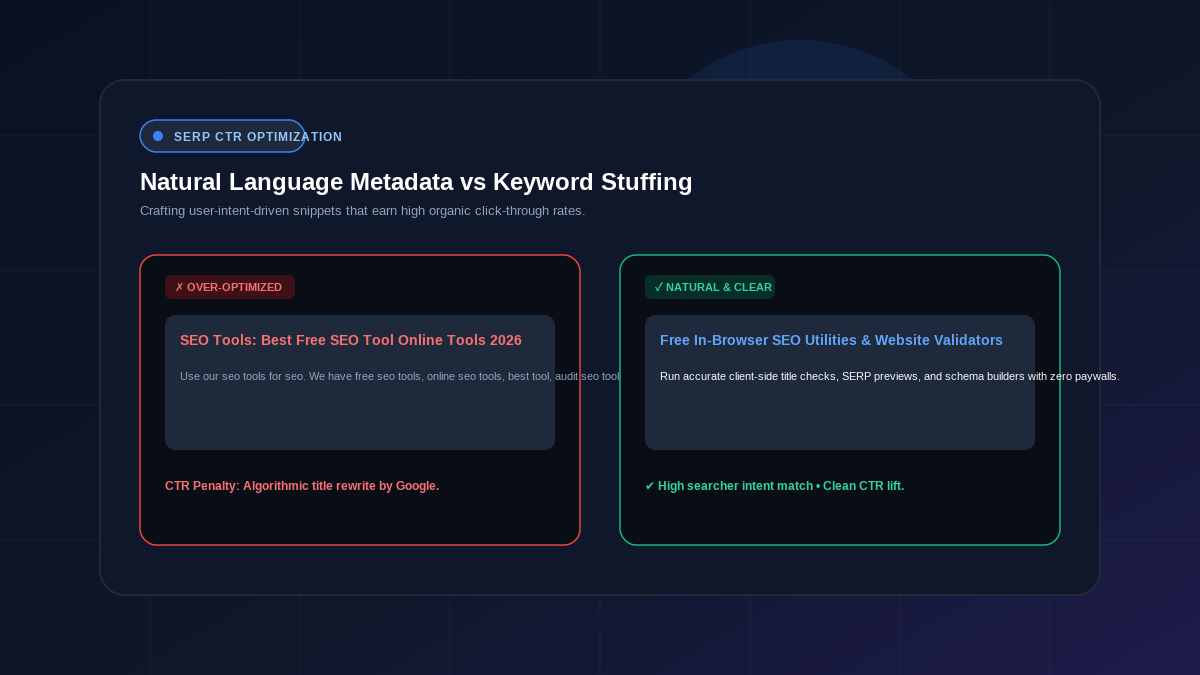
The Dangers of Keyword Stuffing in 2026
In the early 2000s, search optimization often resembled a mechanical game of repetition: cramming every slight permutation of a keyword into title tags, meta descriptions, and alt tags.
Today, search engines like Google use sophisticated transformer-based AI models and entity graphs. When algorithms detect repetitive, ungrammatical keyword strings, they don't reward the page—they flag it:
- Google Title Rewrites: If your title reads "Best SEO Tools, Free SEO Tools, Top SEO Tool Online", Google's algorithms will actively discard your tag and substitute an H1 heading or anchor text instead.
- Plummeting Click-Through Rates (CTR): Modern users are digitally savvy. When a search snippet looks like spam, users scroll past it to click an authoritative, human-sounding headline.
- Algorithmic Quality Devaluation: Excessive keyword stuffing signals low overall content quality, putting your domain at risk during broad core algorithm updates.
Entity SEO: Why Concepts Matter More Than Word Counts
Modern search engines organize information around Entities (unambiguous people, places, things, concepts, and relationships) rather than isolated strings of text.
Instead of repeating "keyword research tool" five times, an entity-rich webpage demonstrates expertise by naturally discussing related concepts and subtopics:
- Search volume metrics
- User search intent
- Long-tail query variations
- SERP competitive difficulty
- Click-through rates (CTR)
When your metadata succinctly encapsulates the core entity and primary benefit, search engines recognize the topical authority without any need for clumsy repetition.
Crafting Natural Titles: The Before and After
Let's examine real transformations across common website niches:
Example 1: Local Service Business
- Stuffed & Spammy: Plumber Boston, Best Plumbers Boston, Emergency Plumbing Boston MA
- Natural & Authoritative: 24/7 Emergency Plumbing Services in Boston | BayState Plumbing
- Why it wins: Front-loads the high-urgency value proposition ("24/7 Emergency"), clearly specifies the service and location ("Plumbing Services in Boston"), and concludes with a trusted brand name within 58 characters.
Example 2: E-Commerce Product Category
- Stuffed & Spammy: Buy Men's Wallets, Leather Wallets, Cheap Wallets, Slim Wallets For Men
- Natural & Authoritative: Handcrafted Men's Leather Wallets & Slim Cardholders | Heritage Leather
- Why it wins: Combines core categories ("Leather Wallets", "Slim Cardholders") while highlighting product quality ("Handcrafted") in natural English.
Writing Conversational, High-Converting Meta Descriptions
Remember: Meta descriptions are your unpaid organic ad copy.
Rather than stuffing a comma-separated list of keywords, treat your description as an invitation that promises an actionable solution:
[Hook / Problem] + [Tangible Benefit] + [Clear Call-to-Action]
- Spammy Example: XML sitemap validator, free sitemap tester, check sitemap, validate sitemap online, sitemap tool.
- Optimized Example: Validate your XML sitemap against official protocol standards. Detect syntax errors, missing URL tags, and date format issues instantly. Test your sitemap now. (161 characters)
Notice how the optimized description includes the primary concept naturally, describes the exact problems the tool solves, and finishes with a compelling call-to-action.
Optimizing Open Graph and Twitter Cards Without Clutter
When optimizing social metadata (og:title, og:description, twitter:title), readability is even more critical:
- Social feeds (Facebook, LinkedIn, X, Slack) are purely visual.
- Avoid keyword-stuffed strings completely; prioritize engaging, conversational headlines that encourage social shares and discussions.
- Test your social markup using our Open Graph Generator and Twitter Card Generator.
Step-by-Step Metadata Audit Workflow
- Paste your proposed title into our Title Tag Length Checker to verify character limits and pixel dimensions (~580px).
- Measure your description using the Meta Description Length Checker.
- Preview how the combination renders on desktop and mobile viewports in the SERP Snippet Preview Tool.
- Run your overall text through the Keyword Density Checker to confirm that n-gram frequencies remain natural and well-balanced.
Title Tag Length Checker
Check title tag character counts and pixel width against Google's desktop and mobile snippet thresholds.
Meta Description Length Checker
Calculate meta description character lengths and pixel dimensions to keep descriptions concise and compelling.
Open Graph Meta Tag Generator
Generate Facebook and LinkedIn Open Graph meta tags with a live social feed card preview.
Frequently Asked Questions
Can I use the same keyword in both my title tag and meta description?
Yes! Using your primary keyword once in the title tag and once naturally in the meta description is standard best practice. It reinforces topical relevance and causes Google to bold matching terms in search snippets.
What is an acceptable keyword density for metadata?
In a 60-character title tag, your primary keyword phrase should typically appear only once. Repeating the exact same phrase twice in a single title tag almost always reads awkwardly and risks truncation.
Do social meta tags impact organic Google rankings?
Not directly. Google search does not use Open Graph or Twitter tags as ranking factors. However, well-optimized social cards generate social shares, referral traffic, and external brand visibility that can lead to organic backlinks.
About the Author: Elena Vance
Senior Content Strategist & UX AuditorElena specializes in content architecture, user experience, readability, and on-page optimization. She leads the editorial team at SmartCalcBox, ensuring every guide offers genuine, actionable value without keyword stuffing or filler.
Related SEO Guides & Tutorials
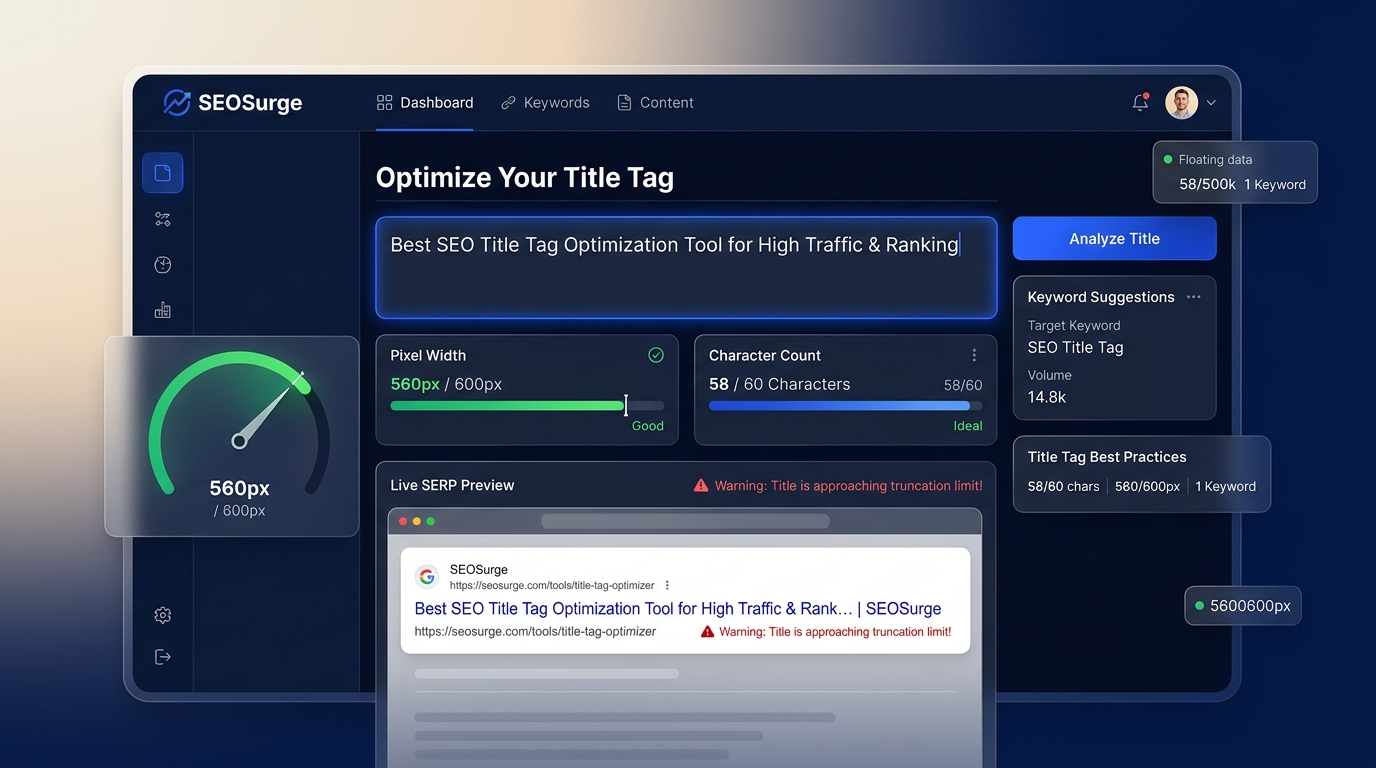
How to Write SEO Title Tags That Describe Your Page Clearly
Title tags are your website's digital storefront signboards in search engine results. Discover how to balance keyword placement, pixel width constraints, and compelling copywriting.
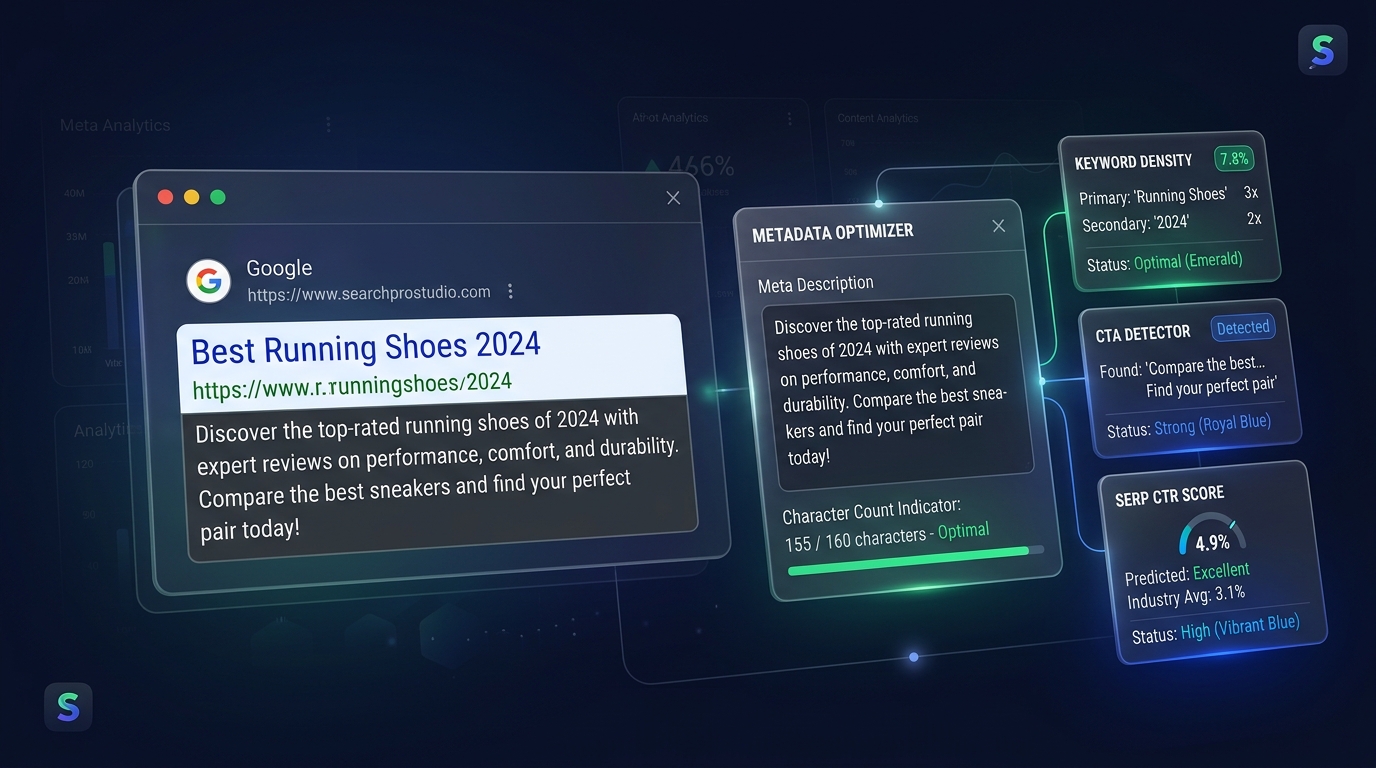
Meta Description Best Practices for Website Owners
While meta descriptions are not a direct ranking factor, they serve as your unpaid organic ad copy. Learn how to write descriptions that turn searchers into visitors.
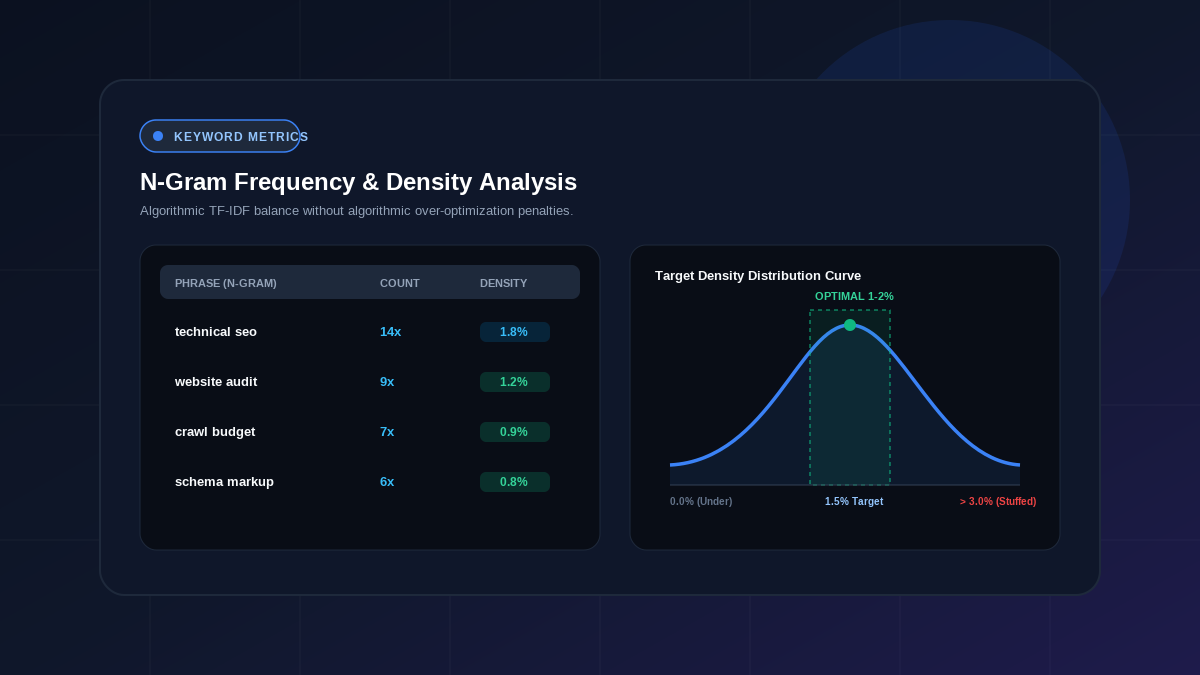
How to Use a Keyword Density Checker Correctly
Keyword density is often misunderstood in modern search optimization. Discover the true purpose of n-gram analysis and how to prevent unnatural keyword stuffing.