content optimization•7 min read
How to Improve Website Content Readability
Readers don't read web content—they scan it. Discover how to improve your readability metrics, lower bounce rates, and keep readers engaged.
Elena VanceRead Guide
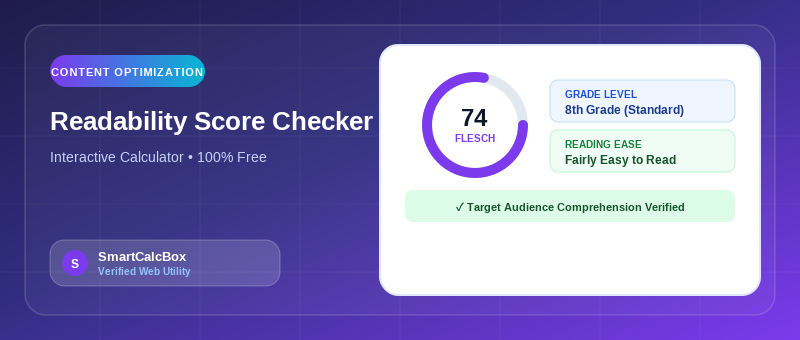
Clear, digestible content improves reader comprehension and reduces bounce rates. Analyze your writing using the validated Flesch Reading Ease and Flesch-Kincaid Grade Level formulas to ensure your content matches your audience's reading level.
Paste your article or webpage draft into the text analyzer.
Review the instant readability score board and grade level badge.
Review average sentence lengths; aim for an average between 14 and 18 words.
Break long multi-clause sentences into shorter thoughts to improve reading ease.
A score between 60 and 70 (roughly 7th to 8th grade reading level) is ideal for general web audiences. It ensures your explanations are accessible to most readers without dumbing down the subject matter.
While readability formulas are not direct ranking signals, accessible prose increases time on page, improves user satisfaction, and reduces dwell-time bounces, all of which support strong organic performance.
Readers don't read web content—they scan it. Discover how to improve your readability metrics, lower bounce rates, and keep readers engaged.
Great articles don't happen by accident—they are engineered through deliberate briefs. Learn how to create content briefs that produce top-ranking articles.
Keyword density is often misunderstood in modern search optimization. Discover the true purpose of n-gram analysis and how to prevent unnatural keyword stuffing.
Instantly count words, characters, sentences, paragraphs, reading time, and speaking duration.
Analyze term frequencies for 1-word, 2-word, and 3-word phrases with stopword filtering and safety guidance.
Generate structured editorial content briefs with outlines, target word counts, and FAQ recommendations.