How to Organize Website Content into Topic Clusters
Random blogging rarely builds lasting organic authority. Learn how to architect topic clusters that signal comprehensive subject-matter mastery to search engines.

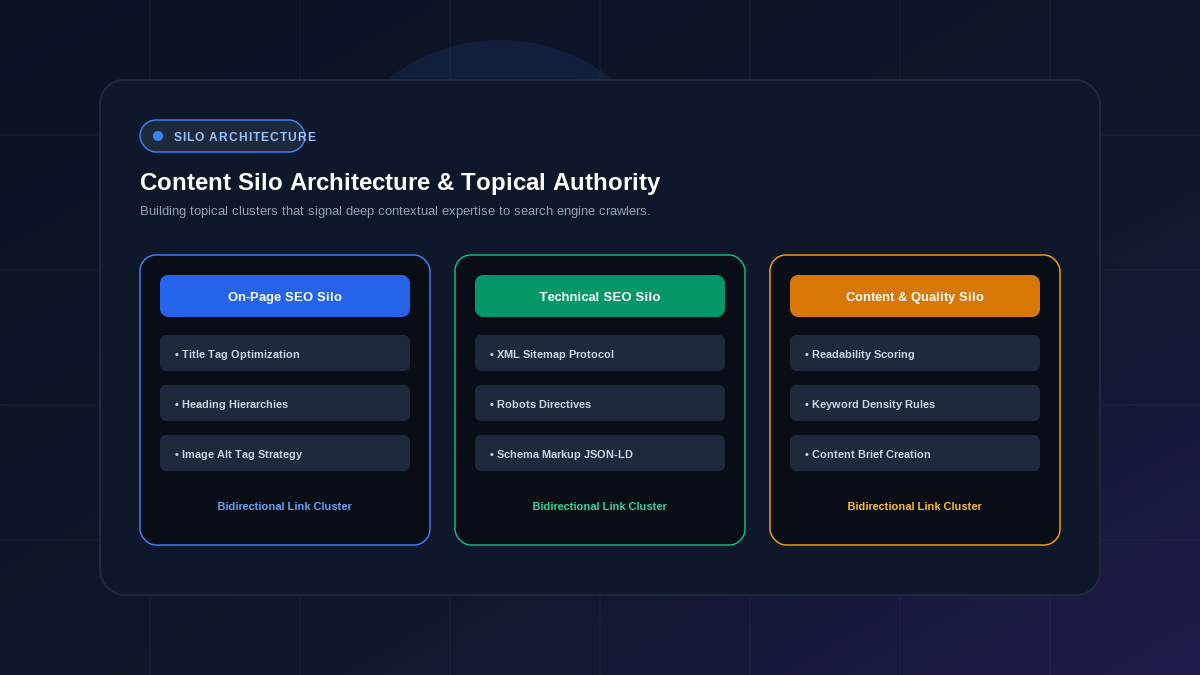
What Is a Topic Cluster and Why Has SEO Shifted?
For years, search optimization relied on a fragmented, one-keyword-one-article model. Publishers would brainstorm isolated search queries and publish dozens of disconnected blog posts that competed with one another in search rankings.
As search engines evolved toward semantic comprehension, natural language understanding, and entity mapping, this fragmented approach ceased to work. Search engines no longer view queries in isolation; they evaluate domain topical authority—whether your website demonstrates deep, structured knowledge across an entire subject area.
Enter the Topic Cluster model (popularized by HubSpot and adopted by leading digital strategists). A topic cluster organizes content into deliberate, interconnected groups focused on a broad core subject, connected through purposeful internal hyperlinks.
The Three Essential Components of a Topic Cluster
A high-performing topic cluster consists of three interlocking elements:
       +------------------------------------+
       |          THE PILLAR PAGE           |
       |  (Broad, Comprehensive Overview)   |
       +------------------------------------+
                     ^      |
            Links Up |      | Links Down
                     |      v
       +------------------------------------+
       |       CLUSTER (SPOKE) PAGES        |
       |    (Deep-Dive Subtopic Guides)     |
       +------------------------------------+
              ^                    ^
              |---- Cross-Links ---|
1. The Pillar Page
A long-form, comprehensive guide that covers the overarching topic broadly. For example, a pillar page might be titled "The Ultimate Guide to Technical SEO". It touches on sitemaps, robots.txt, schema markup, redirects, and HTTP headers without exhausting every micro-detail on that single page.
2. Cluster (Spoke) Articles
Specialized articles that dive deeply into specific subtopics introduced on the pillar page. For instance:
- How to Build a Useful XML Sitemap
- Robots.txt Explained for Beginners
- Canonical Tags Explained with Practical Examples
- How to Check HTTP Response Headers
3. Deliberate Hyperlinks
The connective tissue binding the cluster together. Every cluster spoke links back to the pillar page, the pillar page links out to each spoke, and logically related spokes link contextually to one another.
Step-by-Step: How to Architect a Topic Cluster
Step 1: Choose Your Core Pillar Topic
Select a broad theme central to your business or audience that has substantial search volume and natural subtopics. It should be broad enough to spawn at least 5 to 10 sub-guides.
Step 2: Map Supporting Subtopics & Intent
Conduct keyword research to uncover specific reader pain points. Ensure each proposed spoke targets a distinct search intent to prevent keyword cannibalization.
Step 3: Draft Structured Content Briefs
Before writing, establish clear outlines for each spoke to ensure no overlap. Use our SEO Content Brief Generator to generate targeted outlines with recommended word counts and FAQ items.
Step 4: Map Your Linking Matrix
Use our Internal Link Planning Helper to draft your anchor text and linking map.
Internal Linking Rules for Maximum Equity Flow
- Bidirectional Links Between Spoke and Pillar: Every spoke page should link to the pillar within its first two paragraphs using descriptive anchor text.
- Contextual Cross-Links Between Related Spokes: If Spoke A (Robots.txt) mentions XML sitemaps, it should link contextually to Spoke B (XML Sitemaps).
- Consistent Anchor Phrasing: Use clear, descriptive anchor text that conveys the destination topic without spamming identical exact-match phrases.
How to Measure Cluster Success Over Time
To assess the impact of your topic cluster:
- Monitor aggregate organic impressions and clicks for all cluster URLs combined in Google Search Console.
- Track how external backlinks acquired by one spoke page lift the rankings of connected spoke pages across the cluster.
- Measure average time on site and pages per session as users navigate fluidly between related guides.
Internal Link Planning Helper
Plan topic clusters, map hub-and-spoke internal links, and export structured linking roadmaps.
SEO Content Brief Generator
Generate structured editorial content briefs with outlines, target word counts, and FAQ recommendations.
Heading Structure Checker
Inspect H1 through H6 heading hierarchies, detect skipped levels, and verify document outline integrity.
Frequently Asked Questions
How many articles make up an effective topic cluster?
A solid cluster typically consists of 1 pillar page and 5 to 15 supporting cluster articles. Highly competitive subjects may require 20 or more supporting guides.
Can an article belong to more than one topic cluster?
Yes. An article can serve as a spoke connecting two complementary pillars (for example, an article on 'Image Optimization' can connect to both an 'On-Page SEO' cluster and a 'Page Speed' cluster).
Should the pillar page be published first?
Not necessarily. Many publishers publish several strong spoke articles first, linking them together, and then build the comprehensive pillar page once the foundation is laid.
About the Author: Elena Vance
Senior Content Strategist & UX AuditorElena specializes in content architecture, user experience, readability, and on-page optimization. She leads the editorial team at SmartCalcBox, ensuring every guide offers genuine, actionable value without keyword stuffing or filler.
Related SEO Guides & Tutorials
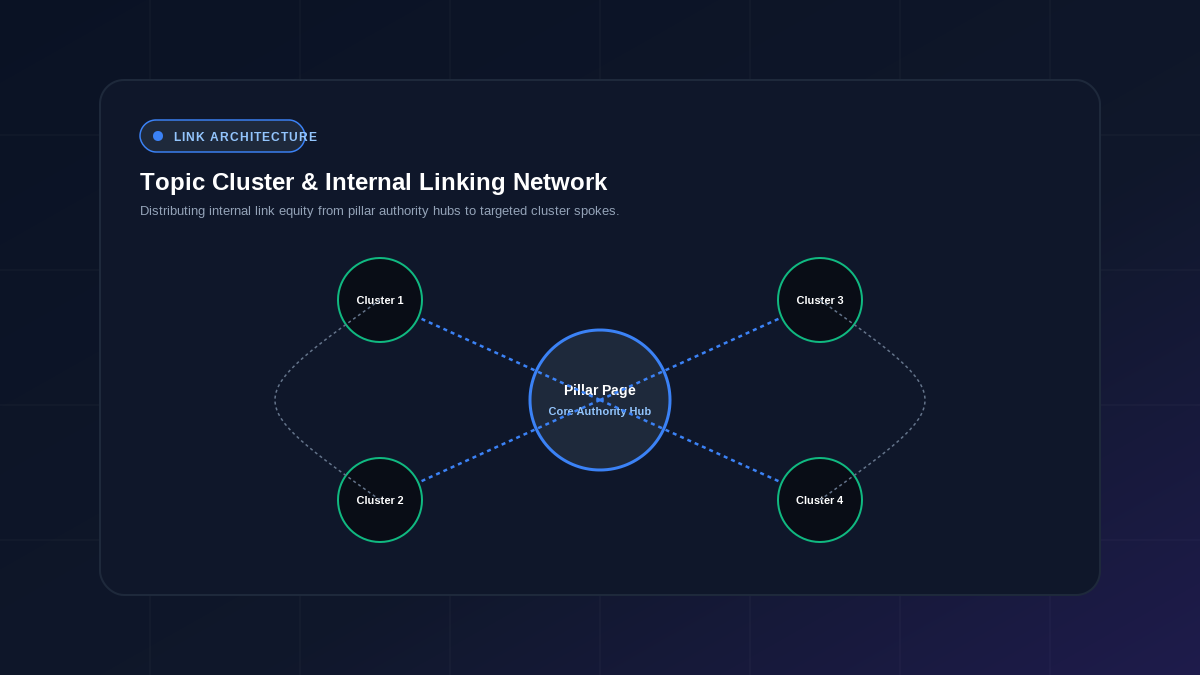
Internal Linking Strategies for Small Websites
You don't need thousands of pages or massive backlink profiles to rank. Discover how deliberate internal linking amplifies authority across small websites.
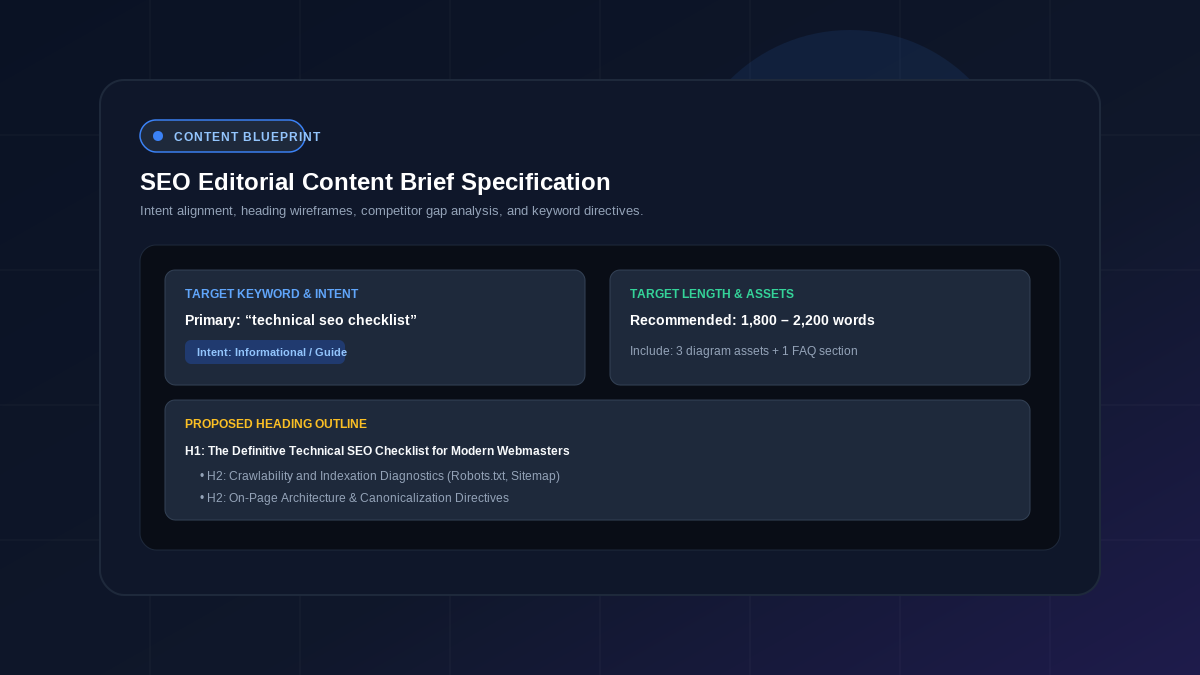
How to Create a Practical SEO Content Brief
Great articles don't happen by accident—they are engineered through deliberate briefs. Learn how to create content briefs that produce top-ranking articles.
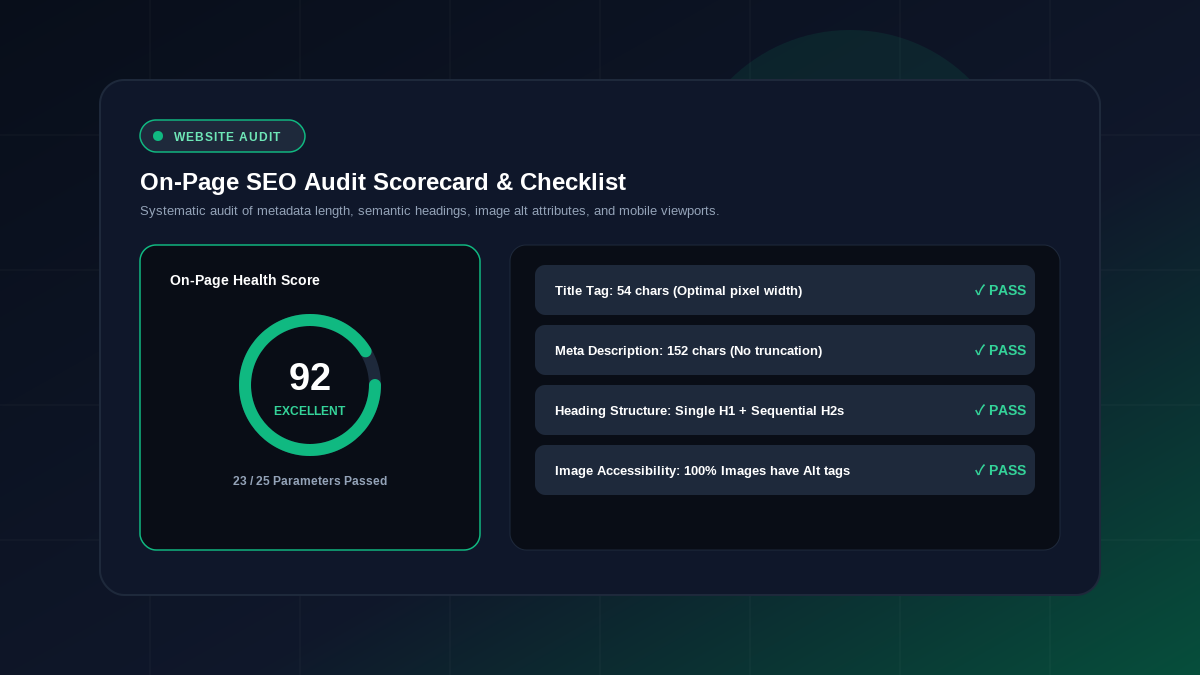
How to Audit Basic On-Page SEO Issues
On-page issues quietly erode organic rankings. Discover our practical step-by-step framework for diagnosing and fixing foundational on-page SEO errors.